Completion of the events on the occasion of the United Nations Office for Disaster Risk Reduction visit in Athens
On March 17 to 19, we had the pleasure and honour to co-lead a three-day engagement dedicated to advancing disaster and climate resilience in Greece, marking the first official visit of the United Nations Office for Disaster Risk Reduction (UNDRR) Chief of the UNDRR Regional Office for Europe and Central Asia, Nathalia Alonso Cano.
CCHub co-organised together with Europe Direct ELIAMEP Attikis, Resilient Cities Catalyst and UNDRR a series of interconnected impactful events bringing together policymakers, local authorities, international organisations, academia, civil society organisations and school students, creating a dynamic platform for dialogue, knowledge exchange, and collaboration. Through constructive dialogue sessions, bilateral meetings, and an interactive workshop for school students, we contributed to raising awareness and laying the groundwork for partnerships for disaster and climate resilience in alignment with UNDRR’s framework.
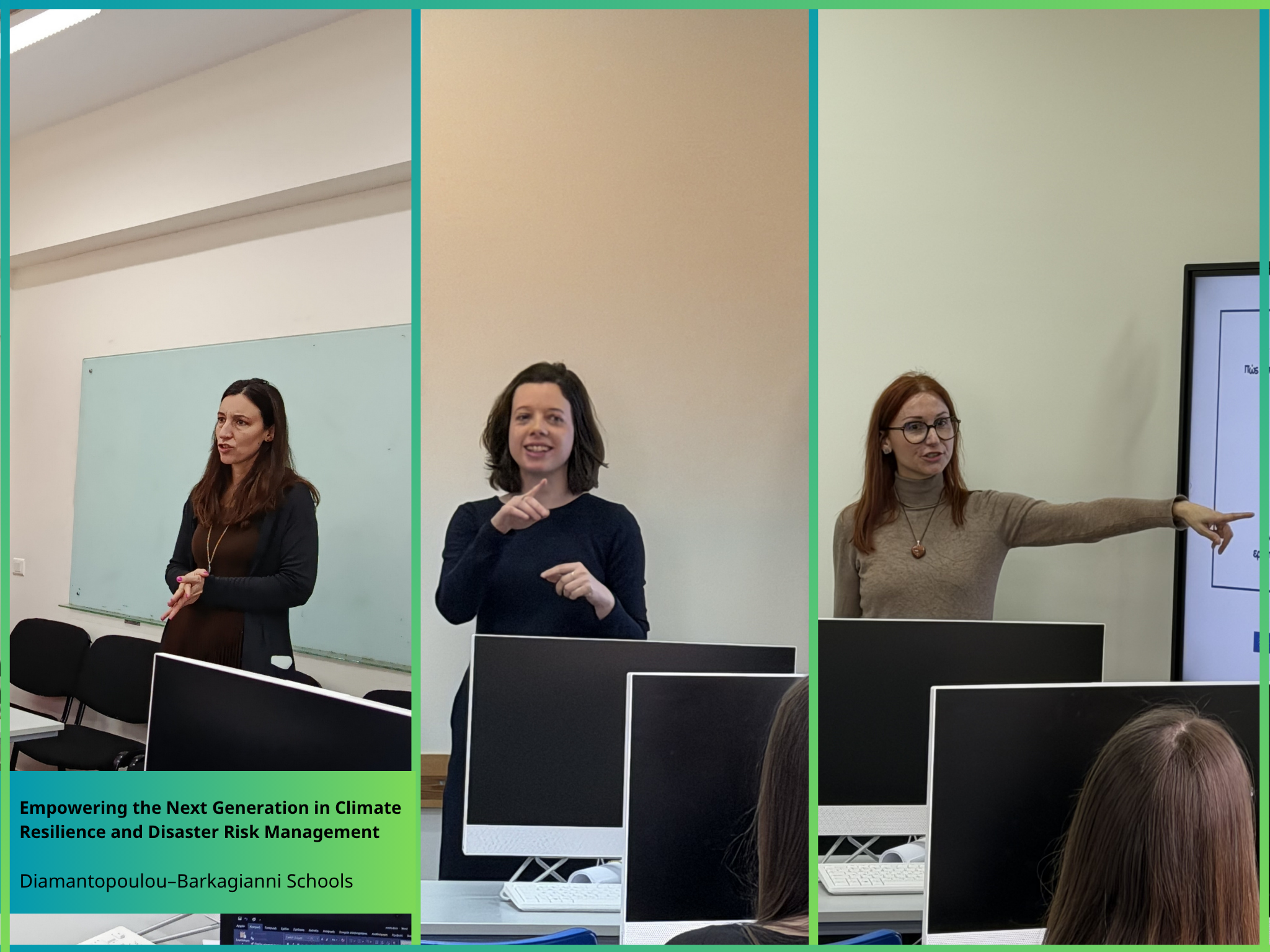
Εmpowering the youth in Disaster and Climate Resilience (heatwaves, floods, tsunamis & wildfires)
The engagement started with a strong focus on the next generation, recognising that building resilience begins with education and awareness. On Tuesday, March 17, we delivered a two-hour interactive workshop on disaster resilience and the climate crisis at Diamantopoulou–Barkagianni Schools in collaboration with Europe Direct ELIAMEP Attikis, Resilient Cities Catalyst and UNDRR, aiming to position them as active contributors to climate action within their communities.
- Evelina Georgiou, Actions and Communications Officer, Europe Direct ELIAMEP Attica delivered the introductory remarks.
- Anthi Konti, the High School Principal and the Director of the English Programme, Dimitrios Salonikis followed with their welcome remarks.
- Konstantina Karydi, in her capacity as representative of the UNDRR Regional Coordinating Committee MCR2030 Europe & Central Asia introduced the framework of the workshop, highlighting the importance of youth engagement and the key role students can play in strengthening community resilience.
- Vasiliki Maltasoglou, General Coordinator of CCHub and Communications Officer, presented how a co-designed social media campaign, developed within the framework of the Public Consultation on Climate Resilience, helped engage more people in EU policymaking processes.
- Rosalind Cook, External Relations at United Nations Office for Disaster Risk Reduction, shared global perspectives from UNDRR’s work and emphasised the critical role of preparedness in disaster risk management.
Students also had the opportunity to play the STOP DISASTER simulation game developed by UNDRR and work in groups to design their own resilience awareness actions.
Participants were introduced to core concepts of disaster risk management, explored real-world challenges such as heatwaves, floods, wildfires, and tsunamis, and engaged in hands-on activities including the UNDRR “Stop Disasters” simulation game and a team-work activity in groups to design their own resilience awareness actions. The session highlighted not only the importance of preparedness but also the role of young people as knowledge multipliers—capable of influencing behavioural change at the local level.
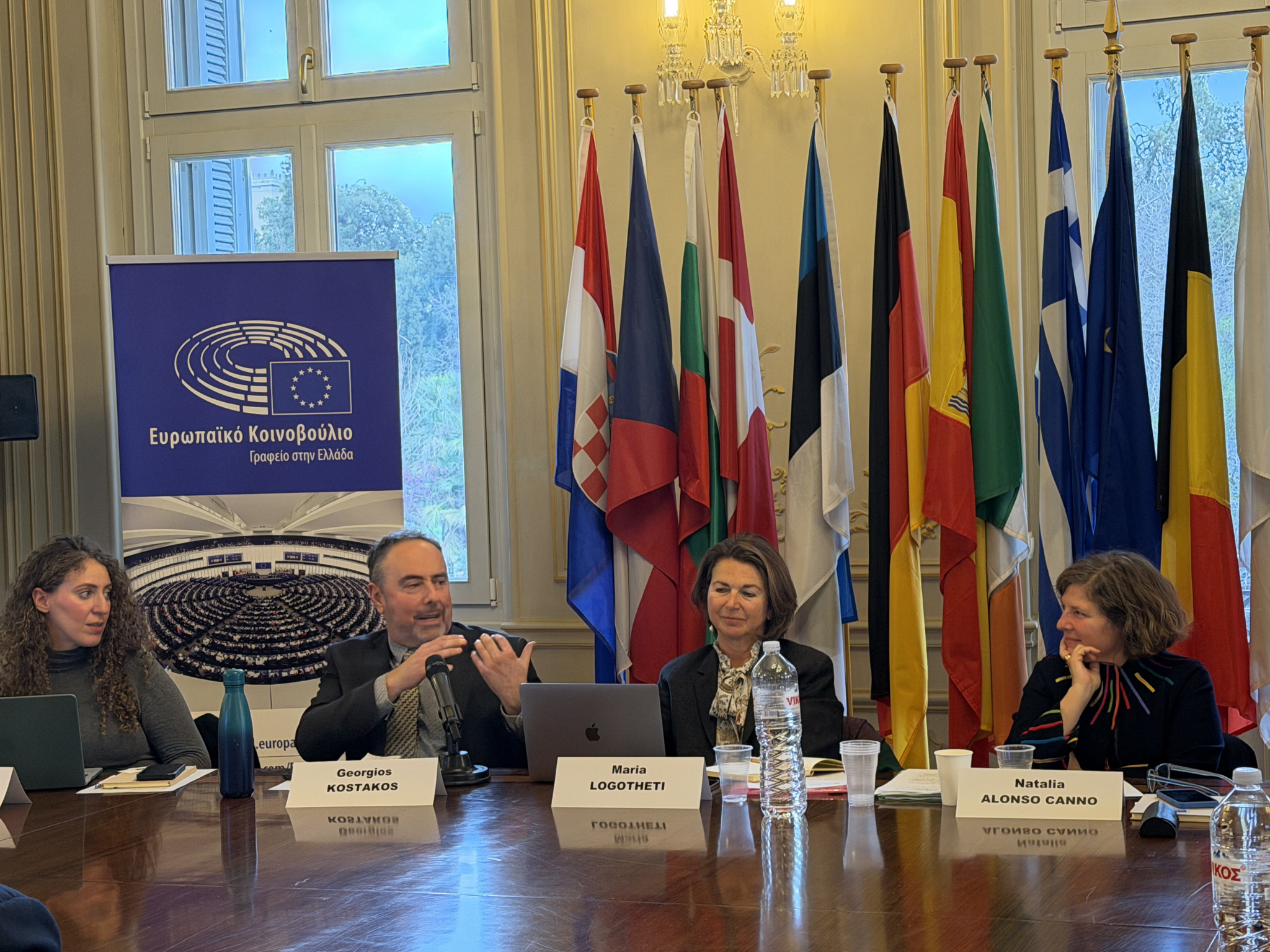
Policy Dialogue on Strengthening Disaster and Climate Resilience in Greece
On the second day, Wednesday 18, we co-organised a high-level policy dialogue hosted at the European Parliament Liaison Office, bringing together representatives from government, academia and civil society. The policy dialogue was co-organised with Europe Direct ELIAMEP Attica, Resilient Cities Catalyst, UNDRR Europe and Central Asia, and the UNESCO Chair on Climate Diplomacy and was held under the Chatham House Rule.
The discussion opened with welcome remarks by Maria Logotheti, co-Founder, Chairperson and CEO of the Climate Change Hub Greece and Expert Minister Counselor MFA a.h., setting the tone for a collaborative and action-oriented exchange. Key remarks were delivered by:
- Natalia Alonso Cano, Chief of the UNDRR Regional Office for Europe and Central Asia
- Nikolaos Vagdoutis, Representative of the Ministry of Climate Crisis and Civil Protection
- Giorgos Kostakos, Managing Director / Scientific Partner at FOGGS and ELIAMEP
The discussion was moderated by Konstantina Karydi, VP of the Climate Change Hub (CChub); Managing Director, Resilient Cities Catalyst (RCC).
The dialogue enabled an open and constructive exchange on Greece’s evolving risk landscape. Discussions underscored the need for:
- Stronger cross-ministerial coordination, moving beyond fragmented approaches to climate governance
- Investment in human capital and institutional capacity, alongside better utilisation of existing data
- A shift from reactive to proactive risk management, with emphasis on prevention and preparedness
The discussion benefited from the diverse expertise of participating organisations, including representatives from the National and Kapodistrian University of Athens Department of Physics, Aristotle University of Thessaloniki, the Department of Economics of the University of the Peloponnese, American College of Greece (Pierce, Deree, Alba), AE4RIA (Athens University of Economics and Business / ATHENA Research Center); from global and national networks: UNEDP, ICLEI Europe, GCoM, GREEK NETWORK OF RESILIENT CITIES; civil society: Women Act, ARC NEST ΙΚΕ, EU Youth Hub, FOGGS, Kali Polis Project; environmental organisations: ENA Institute, Earth Organisation, ATHENA RC, Greenpeace Greece; and independent professionals in climate resilience, energy and urban transformation.
The discussion revolved around existing climate resilience practices in Greece and the European Union, as well as possible pathways to further strengthen them. Participants reflected on both progress achieved and remaining structural gaps, with a shared understanding that resilience requires a more integrated and people-centred approach.
Some key conclusions that emerged included Greece’s steady progress in strengthening early warning systems and preventive measures, while also highlighting the need for further consolidation and improvement. A strong emphasis was placed on the need to decentralise responsibilities from national authorities to the local and regional level, empowering municipalities and regions to play a more active role in resilience planning and implementation.
The discussion also underlined the importance of addressing disinformation related to climate change and resilience, which can undermine public trust and slow down effective action. Closely linked to this was the need to better connect citizens to policy dialogue at both national and EU level, ensuring that resilience-building processes are more inclusive, transparent, and participatory.
Overall, participants stressed the importance of investing in small-scale, community-based projects across the EU, as a way to strengthen local ownership of climate action. This was closely tied to the broader need to cultivate a stronger sense of connection between society and the environment, reinforcing resilience not only as a policy objective, but as a shared societal responsibility.
At the same time, the dialogue highlighted persistent challenges, including limited data accessibility, gaps in local planning, and issues of trust between institutions and citizens. It was noted that while technological tools and AI-driven solutions are increasingly available, overreliance on them without meaningful societal engagement risks creating new “blind spots” in resilience strategies.
A recurring theme throughout the discussion was the importance of co-creation and inclusivity. Resilience was framed as inherently multidisciplinary, requiring the integration of infrastructure, energy, food systems, and social dimensions, and grounded in local realities and community participation.
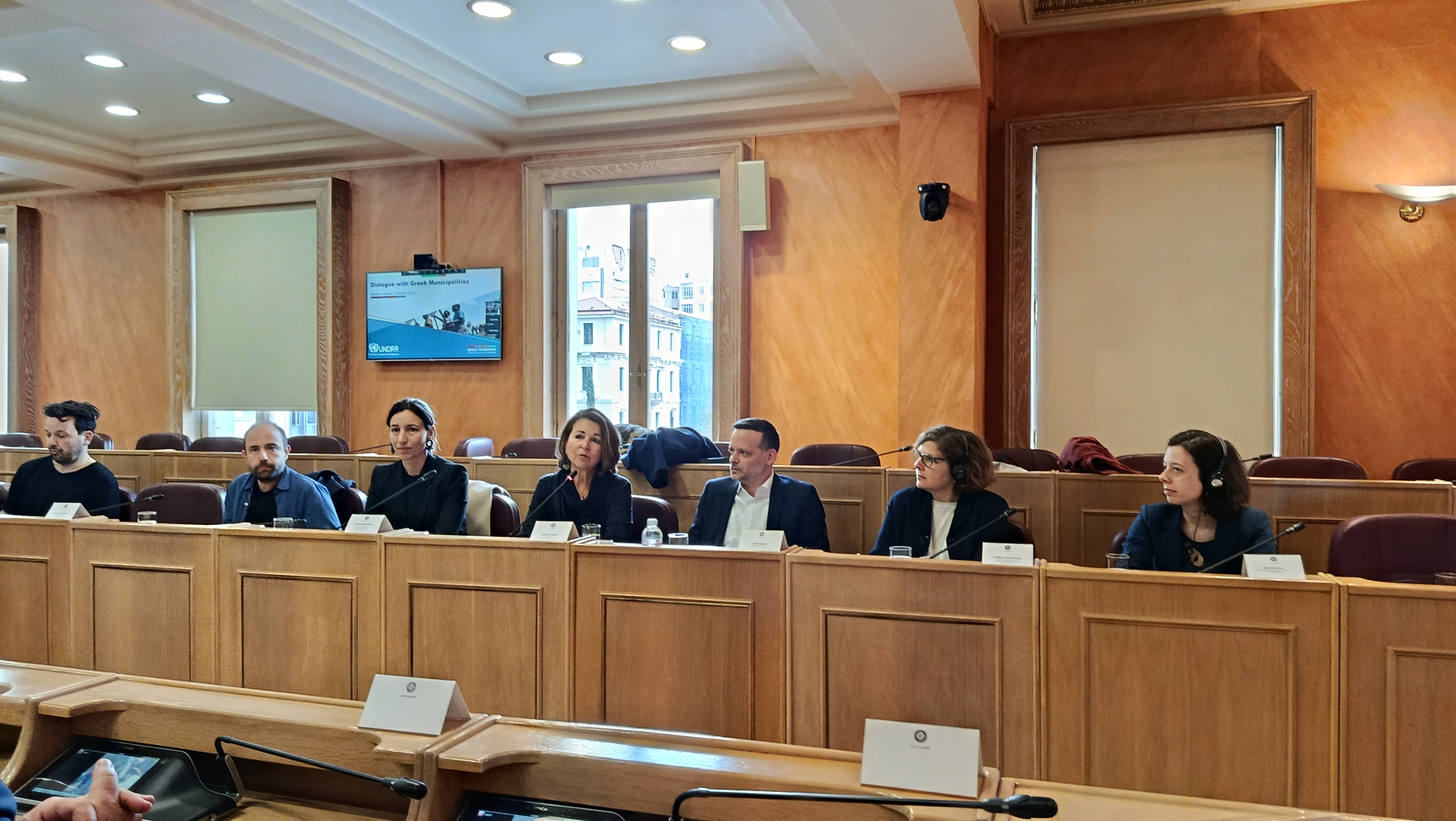
Mayors’ Dialogue: “Resilient Cities and Climate Challenges – Local Government at the Forefront”
The convening concluded with a Mayors’ Dialogue hosted by the Municipality of Athens on March 19, in the presence of Natalia Alonso Cano. The event took place at Athens City Hall and created a dedicated space for direct exchange between local authorities of Greece.
Mayors and representatives from several Greek municipalities participated both in person and online, including mayors and representatives from the Municipalities: Vari–Voula–Vouliagmeni, Skiathos, Ithaca, Kifisia, Elliniko–Argyroupoli, and Kozani. Representatives from municipal departments of the City of Athens, as well as organisations and networks such as ICLEI, C40 Cities, and ELDAP, also contributed to the discussion.
The dialogue provided a valuable opportunity for participants to engage directly with UNDRR leadership, sharing perspectives on local challenges in addressing climate risks, disaster preparedness, and resilience planning, while exchanging good practices.
Particular emphasis was placed on the global Making Cities Resilient 2030 (MCR2030) initiative, with strong interest expressed by municipalities in joining the network. Athens reaffirmed its ambition to act as a Resilience Hub, supporting peer learning, facilitating access to tools and knowledge, and strengthening inter-municipal cooperation. The event laid the groundwork for a structured partnership among municipalities, led by the City of Athens, aiming to co-develop strategies for risk reduction and urban resilience, enhance multi-level governance, and align local actions with European and international frameworks.
To further strengthen the role of the Municipality of Athens as a Resilience Hub, we facilitated a bilateral meeting with Ms. Natalia Alonso Cano, Regional Chief of the UNDRR Regional Office for Europe and Central Asia, and the Mayor of Athens. The meeting reaffirmed the city’s commitment to strengthening resilience efforts, including enhancing preparedness for extreme heat and climate-related risks. UNDRR will support the city in advancing its application to become a Resilience Hub, with the support of national partners, including the Climate Change Hub (CCHub).
Looking ahead - From commitment to implementation
Across all three days, a common message emerged: “Resilience cannot be achieved in silos”. It requires coordinated action across all levels—local, national, and international—supported by trust, data transparency, and active citizen engagement.
The presence of UNDRR in Greece reinforced the country’s commitment to strengthening disaster risk reduction and highlighted new opportunities for collaboration. From enhancing early warning systems and improving data governance to promoting education and youth engagement, the outcomes of this engagement point towards a more integrated and forward-looking resilience agenda.
At the same time, the discussions made clear that progress depends not only on strategies and tools but on the ability to translate them into inclusive, actionable policies. Bridging gaps between institutions, activating interdisciplinary cooperation, and empowering communities will be critical in shaping a resilient future.
As engagement with MCR2030 expands and partnerships deepen, Greece is well positioned to play a leading role in resilience-building efforts across the region—demonstrating that meaningful change begins with collaboration, shared vision, and sustained commitment.